
Marshall County Arrest Log Availability
Marshall County publishes no official arrest log. There is no 72-hour list, no seven-day list, no weekly roundup, and no ongoing booking roster. None of it appears on any county government site. The sheriff's official page describes patrol and jail duties. It covers how incoming arrestees are booked and processed. But it offers no blotter link, no searchable archive, and no schedule for posting anything. Henry, Lacon, and Toluca run no municipal arrest logs either. That matters. A gap implies a list with missing dates, while here there is no list at all. Weekend volume, refresh times, and photo rules are simply unknown. Build your date range from agency records rather than guessing from silence.
Build a Marshall County Arrest Range
Frame a multi-day request around the records, not just a name. Decide first what you want. Is it every arrest during set dates, one named booking, or the court outcome that came later? Each piece belongs with a different custodian.
- Set exact start and end dates and state whether the range includes both calendar endpoints.
- Ask the Marshall County Sheriff’s Department for releasable arrest and jail booking records in that span.
- For a known city-police arrest, request the arrest report from Henry or Lacon police; Toluca’s official page says sheriff services cover the city.
- Ask for receipt, discharge, and transfer dates so an old booking is not mistaken for current custody.
- Use the Circuit Clerk and Judici after filing to trace the court case to its disposition.
The sheriff names Carrie Fidler as its written FOIA contact. Mail the request to the Marshall County Sheriff's Department, 520 6th Street, Lacon, IL 61540. You can also call 309-246-2115 to confirm delivery instructions. Tight dates and named fields cut down confusion.
Marshall County Blotter Record Fields
Marshall County has no local roster screen. You cannot copy column names from one. Illinois arrest-information law still gives you a solid request list. The agency may hold more detail than the law requires. Exemptions can limit what gets released. Ask for electronic records when they exist, and keep arrest, jail, and court fields separate.
| Field | Meaning in a multi-day log |
|---|---|
| Name and age | Identifies the recorded person while allowing for similar names. |
| Arrest date and time | Places the law-enforcement event inside the requested span. |
| Arrest location | Shows where the arrest occurred, not where booking occurred. |
| Agency | Names the investigating or arresting office. |
| Charge at arrest | States the charge recorded then, not the case result. |
| Jail receipt | Shows when county custody began, if the jail accepted custody. |
| Discharge or transfer | Explains when county custody ended or moved. |
| Photo, when available | No Marshall County public-display policy was located. |
A booking number helps pull up a jail record. Marshall County exposes no public numbering format for them. A court case number lives in a separate layer entirely. When dates or charges differ between the arrest report and the docket, label each source and date rather than quietly merging the two.
Marshall County Weekend Arrest Records
Nothing shows a Marshall County weekend surge or a Monday posting routine. Friday-through-Sunday arrests do not land in one Monday batch. Promising that would be false. Reports, jail receipts, releases, and court filings each follow their own pace. Holidays can stall a records counter. Widen the dates when the arrest time is unclear. A late-night arrest, for instance, may not reach the jail until after midnight. In that case, ask for both the event time and the receipt time. The request should span both sides of the boundary. For a single calendar day, use 24 Hour Arrests. The arrest log covers the longer span.
Note: No fixed weekend update time exists, so confirm timing directly with the agency.
Local News Is Not an Arrest Log
The Lacon Home Journal is a small weekly paper. Its site carries news and an e-edition, but no Marshall County arrest or mugshot blotter. A story may cover one big incident and skip the routine arrests around it. It can also run before a dismissal changes everything. Treat news as context, never as the county dataset. The same goes for the City of Lacon news page, which posts municipal notices rather than any police booking ledger.

City announcements may appear there. None of it forms a booking list. A second look at the Lacon Home Journal shows the newspaper route instead.
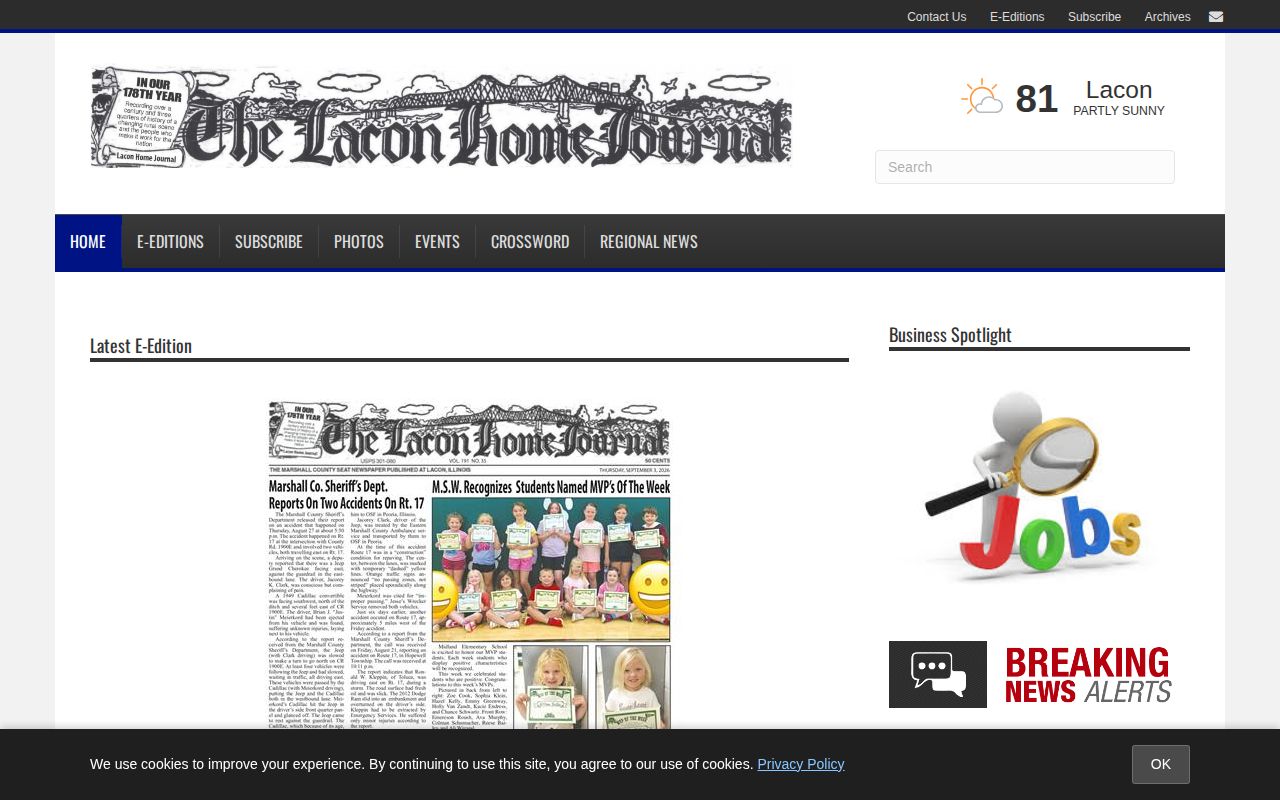
Its reporting remains secondary to sheriff records and the Circuit Clerk’s court file.
Marshall County Arrest Archives
The sheriff posts no retention schedule for booking records or photos. Illinois agencies may dispose of records only under approved Local Records Commission authority. That rule sets no single lifespan. Ask which approved schedule covers the items. Arrest reports, jail registers, booking photos, and electronic exports each matter. Ask too whether an item still exists, moved elsewhere, or was lawfully destroyed. History has another path here. For older newspaper digging, the Illinois Digital Newspaper Collection's Lacon Home Journal holdings open a separate historical path.
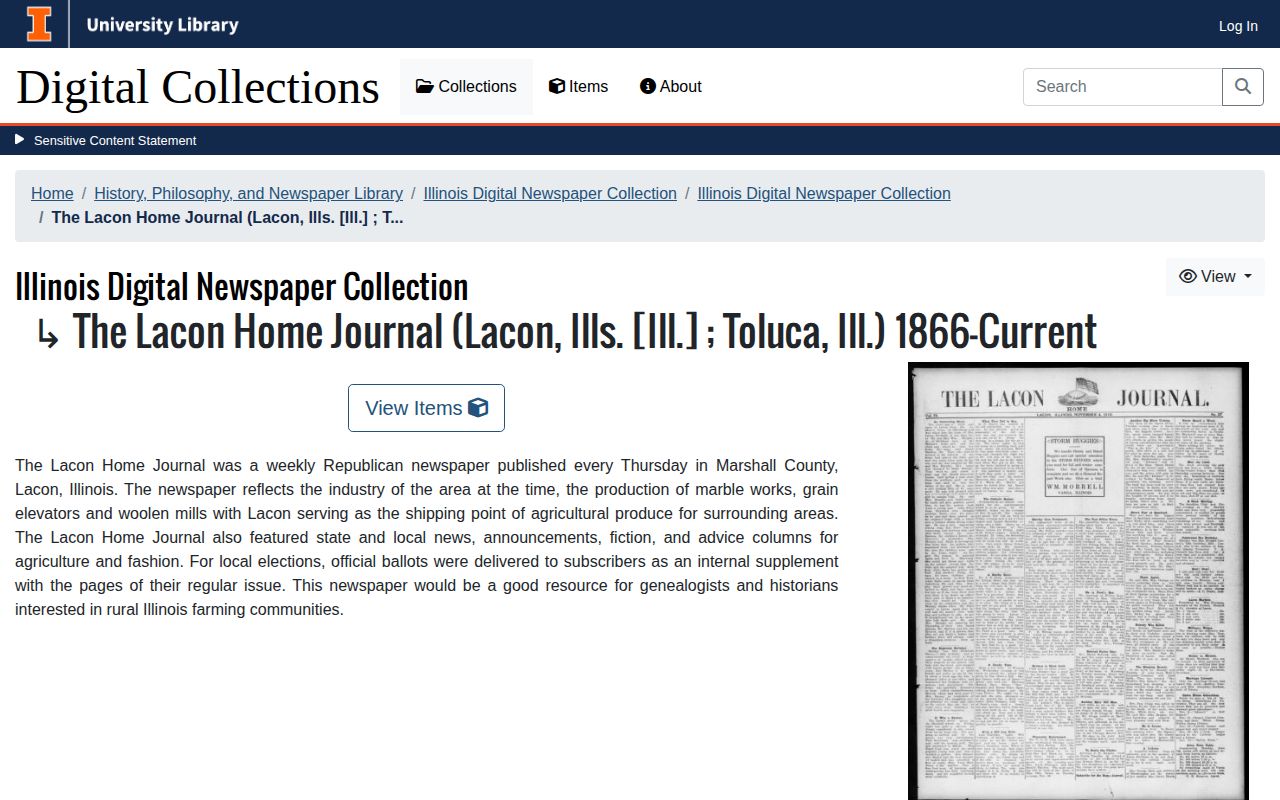
That collection holds newspaper pages, not live custody data or a full booking log. IRAD at Illinois State University can help locate older county record series. The Illinois State Archives can too. Give them the agency and record type. Add the name and date span. A missing archive result does not mean an arrest never happened. An old clipping, likewise, cannot show who remains in custody today.
Verify Marshall County Arrest Outcomes
An arrest log marks the start, not the finish. To see how a Marshall County case ends up, go to the court layer. The Marshall County Circuit Clerk connects to Judici. The county courthouse sits inside Illinois's 10th Judicial Circuit. Filed counts, hearing dates, and the disposition all live there. A disposition is simply the court's final or current result.
Charges can change along the way. They may be amended, reduced, or dropped entirely, and acquittal happens too. Juvenile and sealed matters carry special protections. They may never surface through the usual public routes. Whatever you copy from the log, cite the source and the date. That habit turns a date-range arrest search into a real record trail. It beats a loose roll of names.
Labeling matters just as much as checking. For each item you keep, write down the agency name and the date it was checked. A news story and a court docket can clash. Never merge the two into one claim. The story may describe the original arrest charge while the docket shows a later filing. When no court case turns up, ask the clerk about spelling and filing county. Only then decide the arrest report was wrong. A city report, a county jail booking, and a court case are separate records with separate purposes. The Marshall County arrest trail holds up only when every source is labeled. Its stage, custody or case, must also be clear.